Plan the conversation before connecting the API.
Business messaging needs more than a connection: it needs a sensible customer journey and a reliable handover.
Start with the customer need
I first define why a customer would receive or start a conversation. An order update, a support question, and a promotional message have different goals. Planning those journeys helps the business decide what information belongs in each message and when a person should take over.
Organize the account and integration
I review the business account, phone-number setup, app access, and the responsibilities of the people managing the integration. Credentials belong in secure configuration. A documented ownership and access structure helps prevent the messaging workflow from depending on a single person.
Design templates and events together
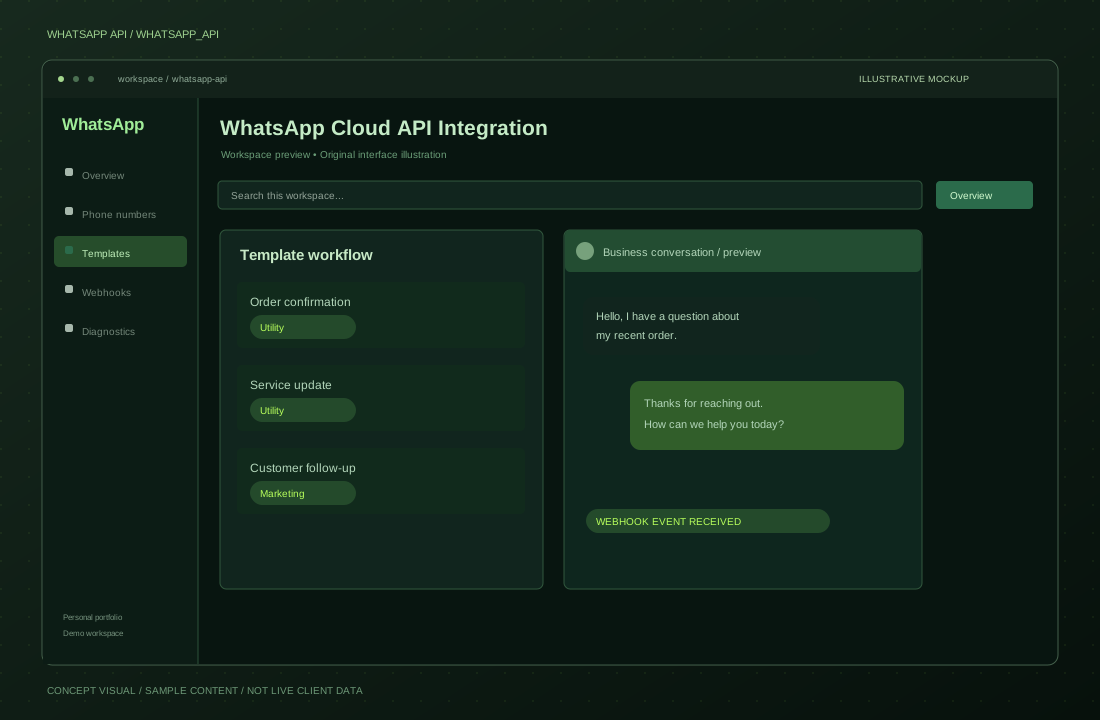
The message text, template category, customer permission, and event that triggers a message should be considered together. I also plan how inbound messages and delivery-status events will be handled. Template approval and messaging eligibility remain subject to the platform’s requirements.
Test the full conversation
Testing should cover more than a successful API request. I review what the customer receives, how the business sees a reply, how errors are handled, and what happens if a message does not arrive. A clear support handover is part of a useful business messaging system.